
Whether your children are moving through middle school with a complex IEP or approaching the end of their high school years, transition planning provides the framework to prepare them for adult life, work, training, postsecondary education, and independent living.
This article walks through what transition plans for students with disabilities involve under Ohio law. It introduces the two Education Alternatives (EA) transition programs that support students on that journey: the Day Treatment Program for K-12 students with emotional and mental health needs, and the VisionQuest Program for young adults through age 22 whose post-school paths lead beyond traditional academics.
You’ll also hear from Christopher Triggs, 17, a Day Treatment student at EA Brook Park who has graduated this year – a story that shows what an EA journey can look like from the inside.
What is a transition plan, and how does transition planning work?
Transition plans for students with disabilities outline a coordinated set of activities aimed at improving their academic and functional achievement and promoting their movement from school to post-school activities.
Post-school activities can include college, vocational training, employment, continuing and adult education, adult services, independent living or community participation. Good transition programs for young adults are outcome-oriented and focus on results that help the student reach their post-school goals.
When transition planning starts under Ohio law
Transition planning happens inside the Individualized Education Program (IEP) process. Ohio requires the IEP team to begin comprehensive transition planning no later than the IEP that’s in effect when the student turns 14 — two years earlier than the federal IDEA baseline of age 16 (Ohio Employment First, transition planning requirements; Ohio Administrative Code 3301-51-07).
From that point on, the IEP team revisits transition goals every year. Goals and services can, and should, change as the student’s needs evolve.
What goes into an IEP transition plan
The school district and any outside agencies involved use age-appropriate transition assessments to gather data. Working with the parent and student, the team sets measurable postsecondary goals covering training, education, independent living skills, and competitive integrated employment.
The IEP also has to spell out the transition services the student needs to reach those goals, including who provides each one and how often. Districts must report progress on transition goals at least as often as they issue report cards. If you have a meeting coming up, EA’s guide on questions to ask at an IEP meeting can help you prepare.
Transition services for special education in Ohio
Once transition goals are set in the IEP, the services that support them are where the real work happens. In a district setting, transition services for special education typically include supported classroom instruction, work-study placements, and connections to vocational rehabilitation.
What varies, and what parents most often come up against, is how consistently those services are delivered day to day.
Programs like EA’s Day Treatment Program and VisionQuest Program build those services into the core school day, rather than treating them as add-ons.
Two EA programs that support transition planning for students with disabilities
EA Schools operates eight locations across northeast Ohio, serving students from kindergarten through age 22. For families thinking through transition planning, two programs are typically relevant.
| Day Treatment Program | VisionQuest Program | |
|---|---|---|
| Who it serves | K-12 students whose IEPs identify emotional or mental health needs | Young adults whose post-school goals are vocational and life-skills focused |
| Ages | K-12 | 9th grade through age 22 |
| Focus | Academics aligned to Ohio standards, integrated with therapeutic support | Employment, independent living, community participation |
| Outcome | High school diploma on track | Real-world skills for stable employment and independent adult life |
Some students complete their entire K-12 education in Day Treatment and graduate with a diploma. Others move into a transition-focused environment like VisionQuest during their later high school and young adult years. The right path depends on the student’s IEP and post-school goals.
Inside the Day Treatment Program: education and therapy combined
The Day Treatment Program is designed for K-12 students with emotional and mental health needs. The structure of the school day looks familiar – academic classes, periods, schedules – but the environment is built to help students develop emotional regulation alongside their coursework so that they can succeed now and in the future.
How Day Treatment supports IEP goals for life skills
Day Treatment goals go beyond academics. Students work on:
- Self-regulating and managing emotions in a healthy way
- Identifying errors in thinking
- Setting realistic goals
- Functioning independently
- Focusing on academics for extended periods
- Developing interpersonal and communication skills
These are the kinds of IEP goals for life skills that show up in a student’s transition plan long before graduation. Regulation, independence, and communication are foundational to any post-school outcome, not just a diploma.
Program highlights include door-to-door transportation, a 1:6 staff-to-student ratio with a maximum of 12 students per classroom, a research-based curriculum aligned with Ohio Department of Education academic standards (including state testing), and licensed teachers and mental health facilitators in every classroom. Instruction is individualized and guided by each student’s IEP, and the program runs at any of EA’s eight northeast Ohio locations.
Our therapeutic approach: Unconditional Positive Regard
EA’s Day Treatment Program is grounded in the principle of Unconditional Positive Regard – the idea that students need a positive foundation of trust, not punishment, to succeed. Every day is a fresh start, a new opportunity to make progress on individual goals. REACH Behavioral Health clinicians work alongside teachers to support that approach in the classroom.
Christopher’s story: from Day Treatment to The Daily
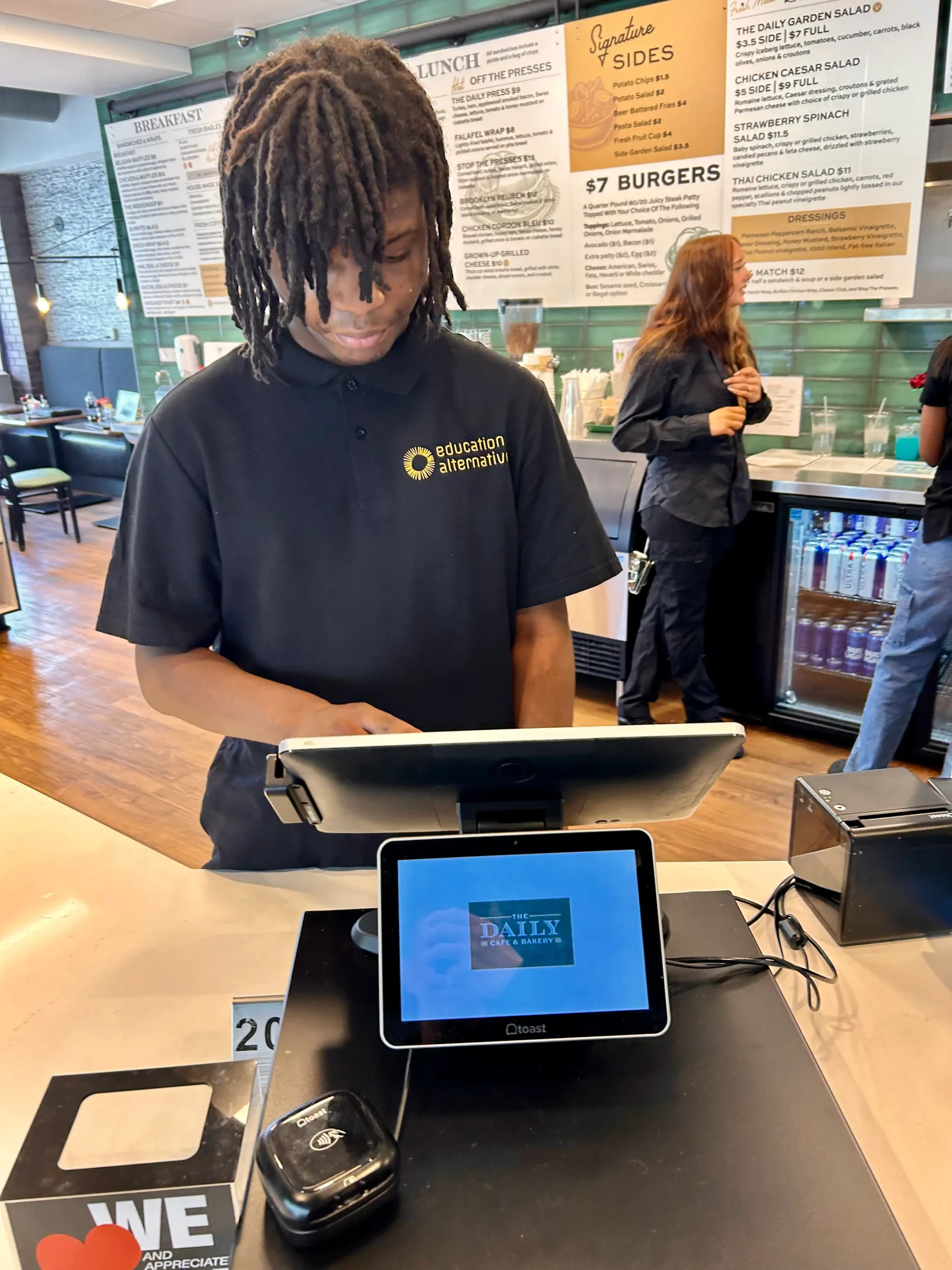
Christopher Triggs is 17 and a graduate of the Day Treatment Program at EA Brook Park.
Asked why he started attending EA Schools, Christopher said:
“The main reason I started attending EA Schools was to work on managing my emotions to better myself and to have a better future. EA helped by teaching me coping skills to manage my emotions and avoid negative situations. The various academic subjects I have studied have helped me grow…”
Twice a week, Christopher works six-hour shifts at The Daily, EA’s on-site restaurant, after the school’s director, Mr. Angell approached him about taking on more responsibility. He started in the back, making school lunches, cleaning, and mopping, then moved up to packing to-go orders, serving customers, and running the register.
“Improving my behavior to a point where I can be independent in my school work and at The Daily, and learning how to push outside of my comfort zone – improving my social anxiety.” he said, when asked what he’s most proud of.
Christopher’s story is one Day Treatment outcome among many: a student building emotional regulation, completing his academic coursework on track for graduation, and gaining real-world employment experience alongside his school day.
(Interview conducted in 2025; Christopher graduated in 2026)
Inside the VisionQuest Program: a life skills program for young adults with disabilities
For students whose path looks different, and who need a dedicated transition program rather than continued academic instruction, VisionQuest picks up where Day Treatment leaves off.
VisionQuest is designed for young adults in high school through age 22, for whom traditional academics are no longer the primary focus. It’s a life skills program for young adults with disabilities that helps students become more self-reliant, guided at every step by their IEP.
Who can join, and how long students can stay
Students with a current IEP from a local Ohio school district that documents a need for skills-focused education are eligible. The program accepts students from 9th grade through age 22, and students can remain enrolled until their 22nd birthday.
Building employment skills through VisionQuest
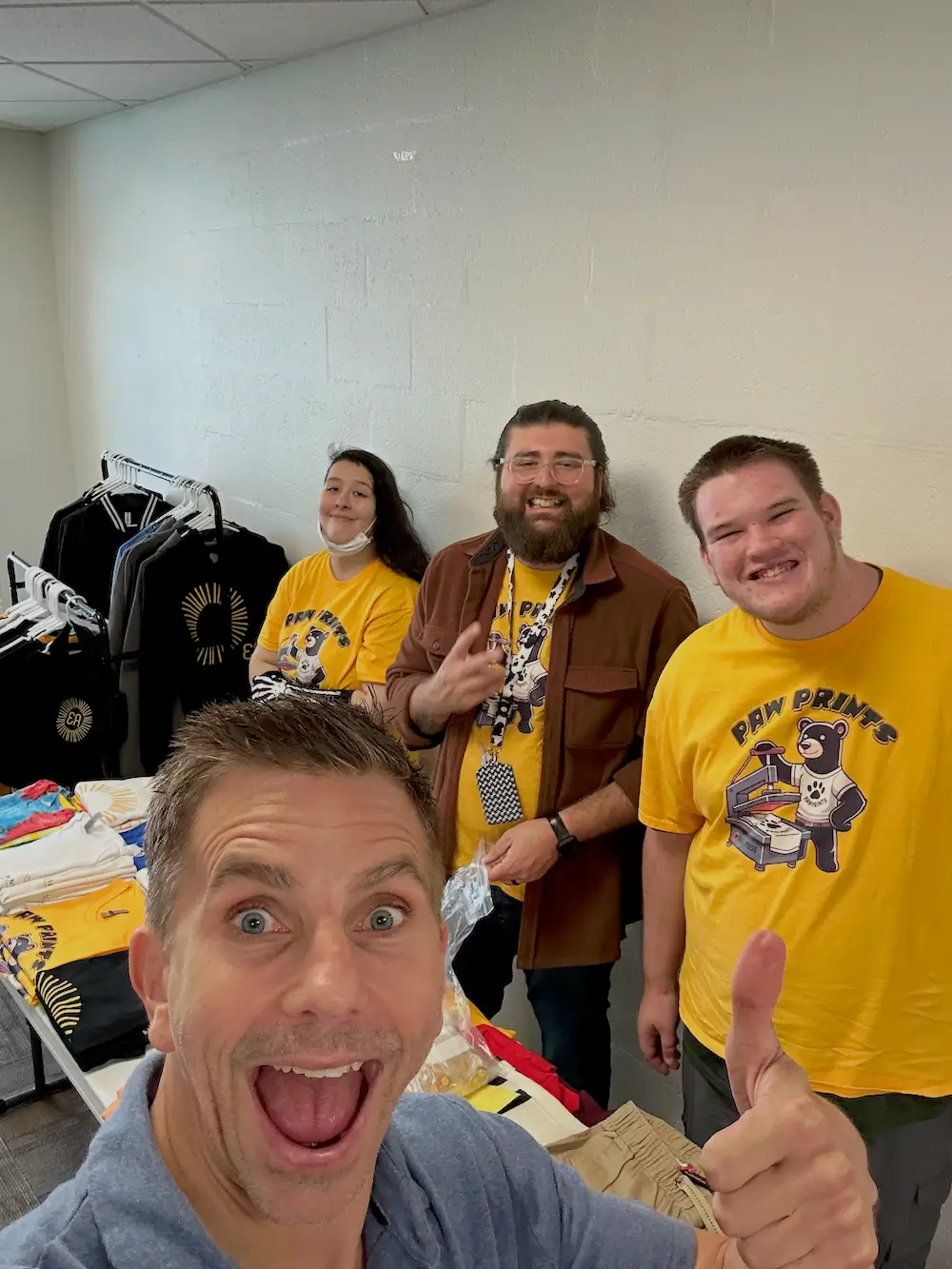
Students build focus and work initiative through on-site, student-run businesses, including PawPrints (personalized apparel), Chubby Cups (food service), and GrEAt Outdoors Groundskeeping, along with off-site placements with local businesses. These supported environments let students practice the building blocks of retail, food service, and outdoor maintenance.
Christopher, who also works front-of-house at The Daily, put it simply: “I really like talking with customers, and one of the skills I’ve learned is ‘small talk’!”
Community involvement and independent living skills
Each week, students work through project-based tasks that mirror common independent living and community skills, like basic wellness and safety tasks, retail and grocery shopping, and leisure activities. The goal is practice, not theory: skills a student will actually use.
Comparing life skills programs in Ohio
Families comparing life skills programs in Ohio for a young adult with a disability are usually looking for the same thing: consistency. VisionQuest connects students and families with the most appropriate adult service agencies and government support programs, and works with families to build a sustainable transportation plan for their student’s specific needs — support most district-based programs aren’t structured to provide at the same level of consistency.
Paying for a transition program: Ohio scholarships for students with disabilities
Cost is often the first question families ask. If your child qualifies for an IEP, you can request a separate educational facility placement through the IEP team. Even without an IEP, other funding pathways may apply.
Ohio offers several state scholarship programs relevant to families of students with disabilities, including:
- The Jon Peterson Special Needs Scholarship, for K-12 students with an IEP and a qualifying disability
- The Ohio Autism Scholarship Program, for students ages 3 to 21 with an autism diagnosis
EA’s admissions team can walk you through eligibility for each and explain Ohio’s state-funded scholarship options in more detail.
How to enroll in an EA transition program
Changing schools is a big decision. To explore a referral or scholarship pathway, fill out EA’s contact form or review enrollment options on the EA website. Someone from the team will walk you through next steps for your child’s situation.
Christopher summed up what that support looked like for him: “My favorite things about EA are that I can focus and work at my own pace, and that the teachers are talkative, understanding and supportive.”
Key takeaways for Ohio families
Transition planning is a legal process, but the outcome that matters is a real one: a student with a plan they can actually use after graduation. Ohio requires that planning to start by age 14 and to include measurable, IEP-linked goals, but the services behind those goals are what actually determine whether a student reaches them.
For students who need more consistent support than a district schedule allows, programs like Day Treatment and VisionQuest build those services into daily school life instead of treating them as extras. If you’re weighing whether a transition program is the right next step for your young adult, reach out to EA’s admissions team to talk through your child’s IEP and goals.
For more on your legal rights during this process, Disability Rights Ohio publishes a plain-language FAQ on transition planning.
Frequently asked questions
When does transition planning start in Ohio?
Ohio requires the IEP team to begin transition planning no later than the IEP in effect when a student turns 14, earlier than the federal IDEA requirement of age 16. Planning can start even earlier if the IEP team decides it’s appropriate for the student.
What’s the difference between an IEP transition plan and a transition program like VisionQuest?
An IEP transition plan is a legal document and a planning tool: it sets goals but doesn’t deliver instruction on its own. A transition program like VisionQuest provides the actual coaching, instruction, and structured experience that turns those goals into real-world skills.
What are IEP goals for life skills, and why do they matter?
IEP goals for life skills cover things like self-regulation, independent living, communication, and workplace readiness, sitting alongside academic goals in a student’s IEP. They matter because they’re often the strongest predictor of a smooth transition into adult life, not just graduation.
Does my child need an IEP to join a life skills program for young adults with disabilities?
In almost all cases, yes. VisionQuest and similar programs require a current IEP from the student’s home school district that documents a need for skills-focused education. If your child doesn’t have an IEP yet, contact your school administrator to confirm they’ve been evaluated.
How long can a student stay in the VisionQuest Program?
Students can remain in VisionQuest from 9th grade until their 22nd birthday. Length of stay is individualized: some students complete an intensive track in around six months, while others stay two or more years as they work through employment milestones.
What funding options help pay for transition services for special education in Ohio?
Families often use the Jon Peterson Special Needs Scholarship or the Ohio Autism Scholarship Program to fund a private placement, alongside services provided directly through the school district. Eligibility depends on the student’s IEP and diagnosis, so it’s worth discussing options directly with an admissions team.
Can I enroll my child directly, or does it have to go through the school district?
Both pathways exist. If your child qualifies for an IEP, you can request a separate educational facility through the IEP team, or apply directly using a state scholarship if your child is eligible.
What if my child doesn’t qualify for an IEP?
You can still ask your school administrator to confirm your child has been evaluated and identified. Some funding pathways, like scholarship programs, have their own eligibility criteria separate from an active IEP, so an admissions team can help you sort out which applies to your situation.